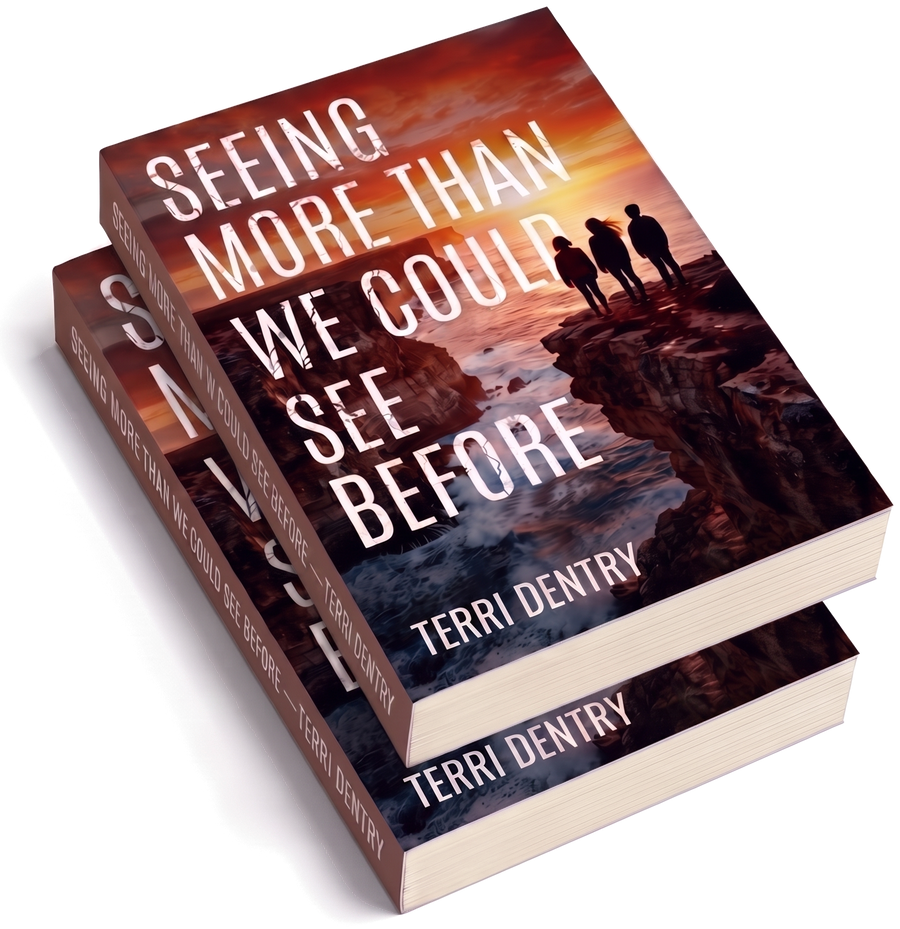
Seeing More Than We Could See Before
At a remote spirituality-and-meaning festival near the Bunda cliffs in South Australia, three teenagers, Charlotte, Ruby and Fox, are found dead at the base of an unfenced lookout soon after dawn. What begins as a question of accident or suicide quickly becomes something darker and more complex: a collision between grief, law, faith, and a public philosophy project that has tried to name and respond to the “meaning crisis” in contemporary life.
The novel follows the lives of those left behind and implicated. Faith Duval, who turns her daughter’s death into a public campaign for justice. Simon Duval, a lawyer and father trying to think clearly inside his own guilt and rage. Alex Henley, the festival organiser facing manslaughter charges. And John, a philosopher whose lectures on awakening, thresholds and relevance realisation may have been heard by some as an invitation to step off the edge rather than stay with reality.
Three deaths, turned into stories, evidence, symbols and arguments
Seeing More Than We Could See Before is a literary thriller that moves through festival grounds, family homes, courtrooms, churches, and online spaces, following how three deaths are turned into stories, evidence, symbols and arguments. It asks what happens when ideas meant to help people see more clearly, about self-deception, crisis, transformation and relevance, are received by those in pain, chronic illness, spiritual hunger, bullying, and adolescent volatility.
Grief and blame
How different people (parents, organisers, church communities, media, courts) reach for explanations that can live with, and sometimes weaponise, their grief.
Culpability and law
The manslaughter trial of Alex Henley, and the attempt to translate spiritual experiments and philosophical language into legal categories of duty, negligence and causation.
Faith, doubt and institutions
How church trust, Christian language, and hybrid spiritual practices are used to create legitimacy, and how those same structures are pulled into the reckoning when things go catastrophically wrong.
The meaning crisis and relevance realisation
A public thinker’s project to address cultural nihilism and “deformation of relevance” collides with the messy reality of how vulnerable people actually use and mishear those ideas.
The same event, seen through many lenses
The book is told through multiple points of view (Simon, Faith, Alex, John and others), allowing the same central event to be seen through legal, theological, psychological, philosophical and intensely personal lenses. Scenes range from the immediate aftermath at Koonalda Homestead and the cliff, through domestic grief and funeral politics, to a detailed manslaughter trial that places “the meaning crisis” and relevance realisation themselves under scrutiny.
Rather than offering one clean explanation for why Ruby, Charlotte and Fox died, Seeing More Than We Could See Before stays with the difficulty of reality: accident and intention, symbolic gesture and impulsive act, structural failure and individual decision, all overlapping without collapsing into a single, consoling frame. It invites readers to ask not only what happened, but how we decide what counts as true, who gets to tell the story, and what kind of work can survive honest contact with the consequences it has in the world.
A note on content
This page describes deaths of teenagers and themes of suicidality and grief. If you have lived experience of suicidality or suicide loss, please treat your wellbeing as more important than reading on. reader guidance and crisis support resources are here.